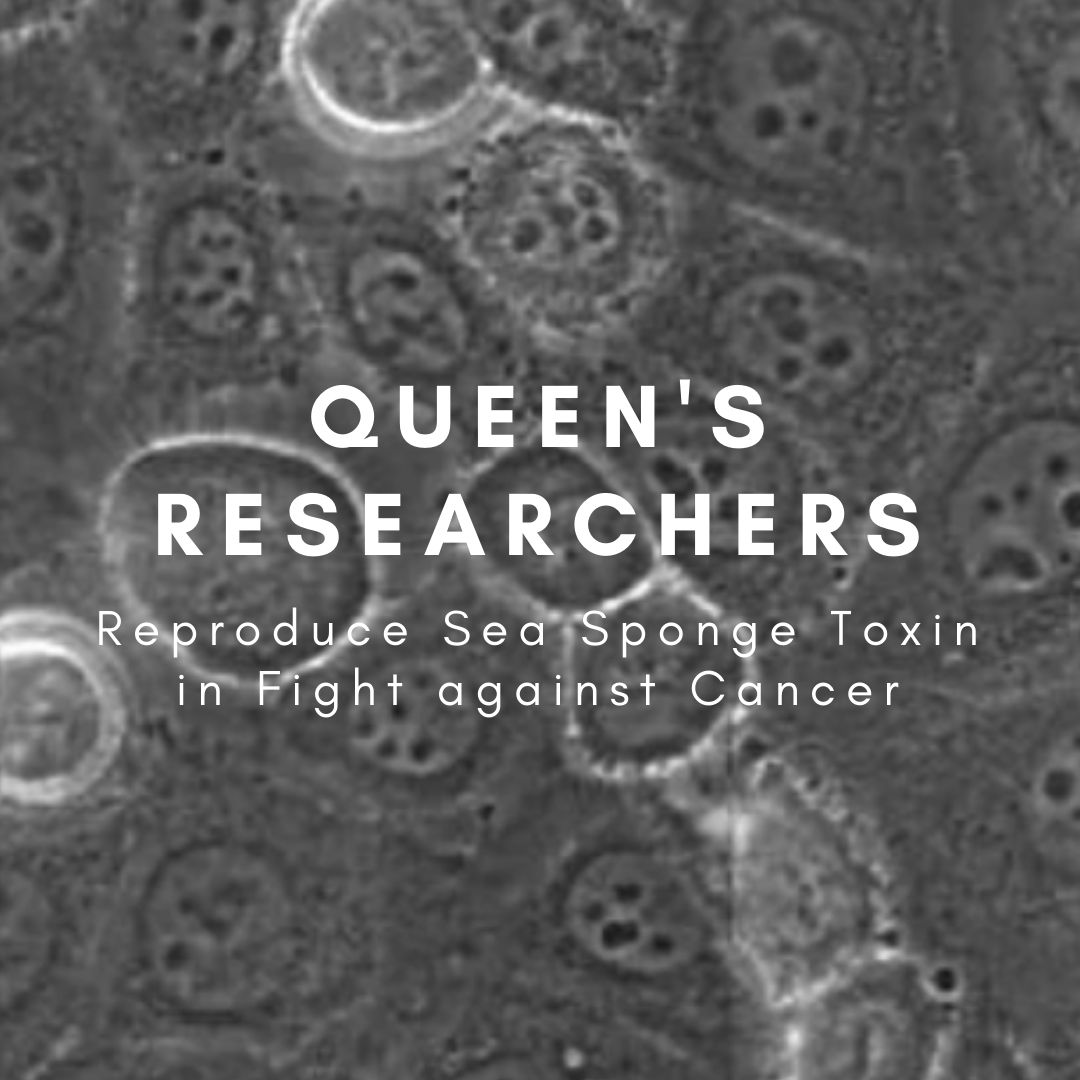
Following a pivotal January 2019 announcement that certain ocean floor sea sponges were found to have toxins that can cause cancer cells to retract, on Thursday May 13th 2021, Queen’s University announced that scientists conducting research on this project have successfully reproduced a toxin found in a marine sponge in the fight against cancer. Joining us in this episode to chat about this groundbreaking research are Dr. John Allingham, Associate Professor and Canada Research Chair in Structural Biology in the Department of Biomedical and Molecular Sciences as well as Dr. Andrew Evans, Professor and Alfred R. Bader Chair of Organic Chemistry in the Department of Chemistry. From them, we learn much about the art of the science of reproducing a natural toxin found in sponges that can block cancer cells from metastasizing, the potential impact of this research, the critical importance of interdisciplinary collaboration to this type of research, and next steps in the project.

It seems there is not any post added into Read Later list.
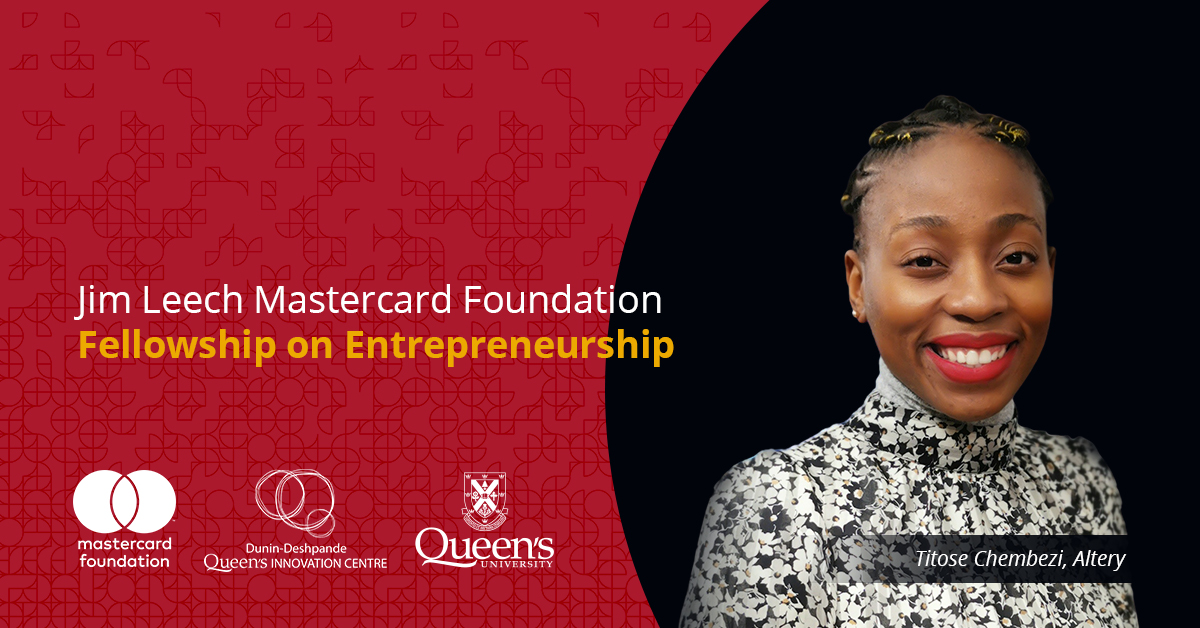
On December 3rd, The Mastercard Foundation and the Dunin-Deshpande Queen’s Innovation Centre (DDQIC) have announced a partnership offering free virtual entrepreneurship training, and an...

Erin Leblanc, Adjunct Lecturer and Director of Strategic Program Development and Accreditation at the Smith School of Business and co-host of CFRC’s weekly program...